


Business: business@xtoolonline.com
Social Media Cooperation: Media@xtoolonline.com
Support: support@xtoolonline.com

If you drive a modern Mercedes-Benz and suddenly see Check Coolant Level See Operator's Manual on the dashboard, the problem is not always as simple as topping off coolant.
In our shop, we regularly see Mercedes owners add coolant, clear the warning, and then watch the message return a few days later — or worse, experience overheating after a DIY refill. Modern Mercedes cooling systems are far more complex than older vehicles, especially on turbocharged engines like the M274 and M276.
Here's what actually causes most coolant level warnings on modern Mercedes models, how professional technicians diagnose them, and why proper electronic bleeding procedures matter more than most people realize.

Before replacing parts or adding coolant, you first need to determine whether the vehicle is truly low on coolant or simply reporting a false warning.
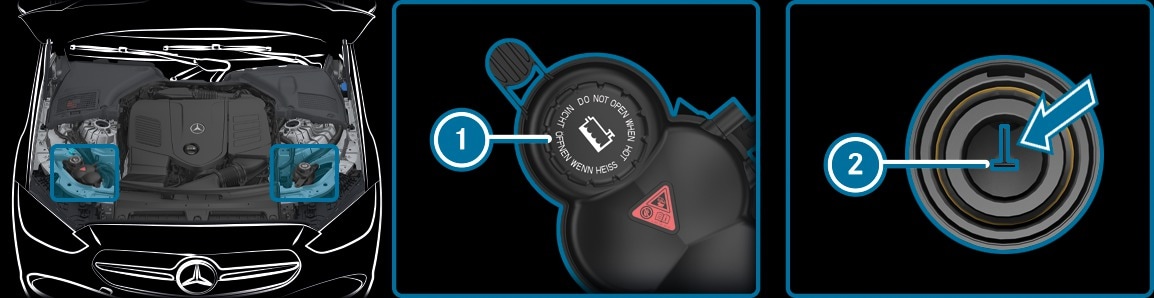
Always inspect coolant levels with the engine fully cooled down — ideally below 140°F (60°C). On most Mercedes-Benz models, the coolant expansion tank uses a floating level indicator or molded MIN/MAX marks.
Many owners accidentally overfill the tank while the engine is hot. Once the coolant contracts overnight, the level can suddenly fall below the sensor threshold and trigger the warning again.
Mercedes also requires specific coolant formulations:
Mixing incompatible coolant types can create sludge or gel formation inside the heater core and cooling passages.
According to industry service data, incorrect coolant chemistry is one of the leading causes of premature cooling system failures in European vehicles.
This is one of the most common Mercedes coolant complaints we see in the shop.
The expansion tank appears full, yet the dashboard still displays:
Check Coolant Level
In many cases, the problem is not the coolant at all.
On several Mercedes platforms, the coolant level sensor shares electrical grounding logic with other fluid monitoring circuits, including the washer fluid system.
We have seen vehicles trigger false coolant warnings because:
This is exactly why professional diagnosis matters. Simply adding coolant may temporarily hide the symptom without solving the actual fault.
When diagnosing intermittent warnings, we monitor:
A visual inspection alone is no longer enough on modern Mercedes thermal management systems.


Not every coolant leak leaves a puddle on the ground.
The turbocharged M274 engine — commonly found in W205 C300 and GLC300 models — is especially known for hidden coolant seepage around:
Most leaks begin between 60,000 and 80,000 miles due to heat cycling and plastic fatigue.
The tricky part?
Many leaks evaporate immediately after touching hot engine surfaces.
Customers often tell us:
I never saw coolant on the floor.
But once we inspect behind the intake manifold with a flashlight, we usually find dried white or pink crusty coolant residue.
The M276 V6 engine also develops slow seepage around the oil cooler housing seals. These leaks may only appear under pressure and can be extremely difficult to locate without proper testing equipment.
Many Mercedes owners unknowingly spend hundreds or even thousands of dollars replacing the wrong parts.
At current U.S. labor rates — often between $180 and $240 per hour in major metro areas — guessing gets expensive quickly.
| Symptom | Wrong Guess | Actual Cause |
|---|---|---|
| Coolant warning returns after refill | Bad thermostat | Faulty level sensor |
| Overheating after coolant service | Failed water pump | An air pocket is trapped in the system |
| Coolant slowly disappears | Head gasket failure | Turbo coolant line seepage |
| The heat stops working intermittently | Heater core blockage | Improper bleeding procedure |
Modern Mercedes vehicles use electronically controlled thermal management systems. That means old-school troubleshooting methods often fail.
Traditional cooling system bleeding methods worked on older cars with mechanical water pumps.
Modern Mercedes systems are different.
Electronic water pumps, mapped thermostats, and multi-path cooling circuits can trap air inside the engine even when the expansion tank appears full.
We regularly see DIY coolant refills cause overheating within minutes because trapped air pockets prevent coolant circulation through critical areas of the cylinder head.
On aluminum engines, localized overheating can become extremely expensive very quickly.
In our shop, we no longer guess and rev the engine when bleeding a modern Mercedes cooling system.
Instead, we use a professional scan tool capable of running the OEM bleeding sequence.
When dealing with stubborn air pockets on W205 or W213 models, we connect the XTOOL IP919 Pro Diagnostic Tool and activate the electronic water pump through the Special Functions menu.

The process typically looks like this:
A healthy Pierburg electronic pump does not run at a constant speed during bleeding. It cycles through multiple RPM ranges while the thermal management system opens and closes internal coolant pathways.
You can literally hear trapped air being pushed through the system while the engine remains safely off.
That is something traditional manual bleeding simply cannot replicate.

The three most common Mercedes coolant problems we encounter every week are:
Most of these problems are completely manageable if diagnosed early.
Ignoring intermittent coolant warnings, however, can eventually lead to:
A Mercedes coolant warning is not always about low coolant.
Sometimes the issue is:
Modern Mercedes cooling systems require a much more precise diagnostic approach than older vehicles ever did.
That is why professional technicians rely on live ECU data, pressure testing, and bi-directional scan tools instead of simply topping off coolant and hoping for the best.
If your Mercedes keeps showing coolant warnings even after refilling the expansion tank, the smartest next step is proper diagnosis — before a minor cooling system issue turns into a major engine repair.


Business: business@xtoolonline.com
Social Media Cooperation: Media@xtoolonline.com
Support: support@xtoolonline.com